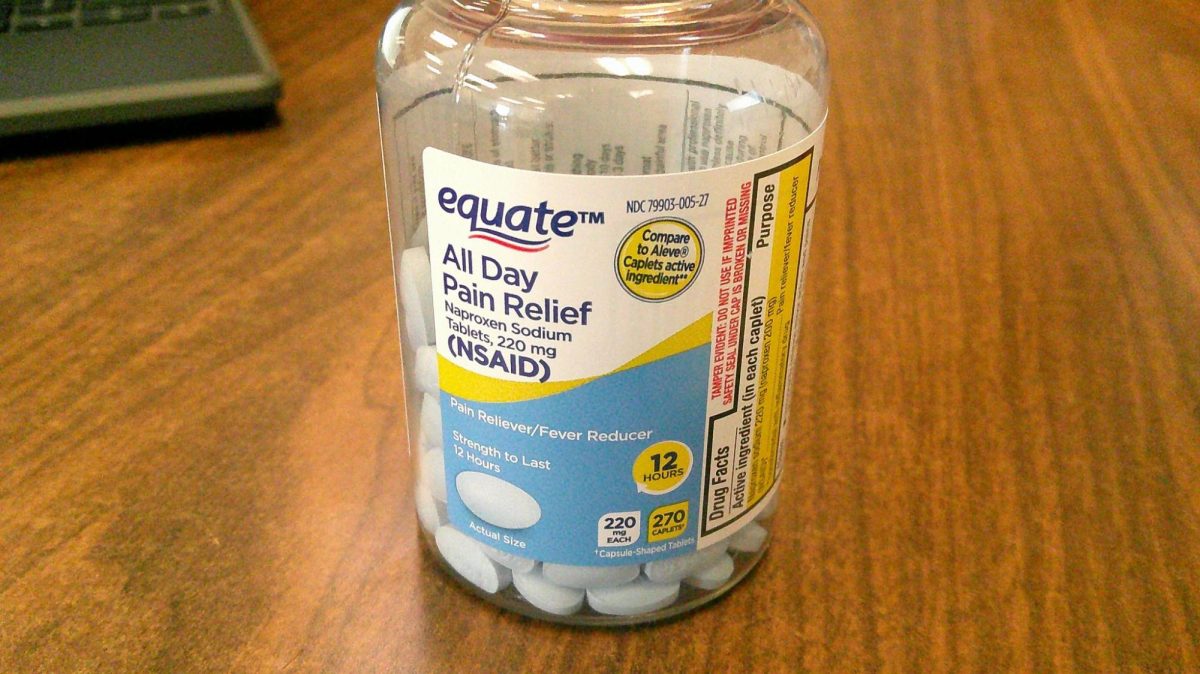
Getting hurt in places where no medication is available is just unlucky. Headaches come unexpectedly most times. Being in places with fluorescent lights without any solution is horrid. Keeping certain medications on you just to be prepared is a fantastic idea.
Tylenol, ibuprofen, and aspirin are highly common medications for headaches. Headaches are more common among teenagers around the age of 15-17 according to the World Health Organization. Women around this age are overfamiliar with menstrual cycles, and the symptoms: cramps. Numerous medications help ease cramps, such as Pamprin, Midol, and any anti-inflammatory pills (NSAIDs). The nurse at Pahrump Valley High School, Pam Peterson, shares, “Over-the-counter meds should be kept here in the office for safety, so no meds are taken without my knowledge.”

For electives that involve physical activity, such as weights and gym, if you get an injury that swells up, having anti-inflammatory medication with you not only takes the swelling down, but temporarily takes the pain away while you are at school. It’s the same idea for people who have after-school sports and practices.
Sione Petelo, a sophomore at PVHS, added, “I would only bring pills for medical conditions, not really anything else.” meaning, he would only bring medicated pills if it was a need.

If you get injured, having some type of anti-inflammatory medication with you is a quick and easy way to temporarily take care of the injury while you are at school. Being able to eliminate pain and swelling quickly can prevent minor injuries from getting worse.
Teachers and coaches aren’t able to give out over-the-counter (OTC) medications, so students who carry the medications with them wouldn’t have to worry about waiting till they get to the nurse or home to take care of it. Waiting that long possesses a strong chance of making the symptoms worse. It’s much more practical and reliable to carry the medications with you.
When you take Tylenol, your body breaks it down using your enzymes, and it stays in your system for around 8-12 hours. When it comes to student health, waiting isn’t an option. School policies need to be updated. Next time you think about it, ask a teacher what they think about this.