For a few thousand years, humankind has made use of the naturally occurring mineral asbestos, as for a great deal of years it seemed to have innumerable uses. But, in recent times it was discovered that asbestos is highly toxic, and is the leading cause of mesothelioma. Yet, it is much closer to home than a person would like.
Asbestos has been used well since the stone age in appliances, seeing major use in many cultures since then such as the Romans, and even into the modern century. But what makes it so useful?
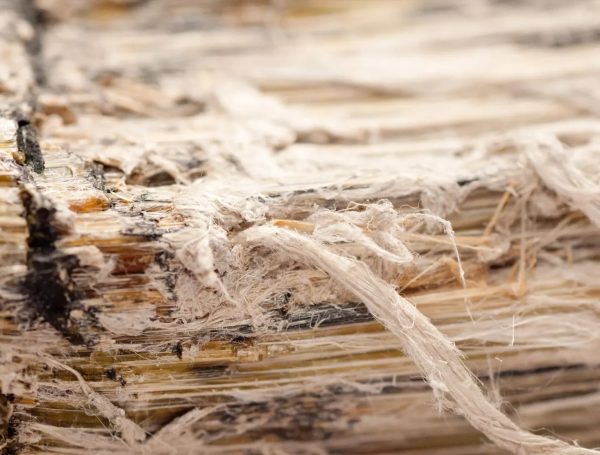
Asbestos is a “fuzzy” mineral, being many tightly-knit fibers that are rather heat resistant, which made it a favored choice in all forms of insulating. Societies such as the Romans, who thought it to be akin to magic, used it in many products according to the United Nations of Roma Victrix (UNRV.) “They wove asbestos fibers into fabrics to make towels, napkins, nets and head coverings for women. It was also used in cremation robes and candlewicks and may have been used in the everlasting flame that was kept alight by the Vestal Virgins.”
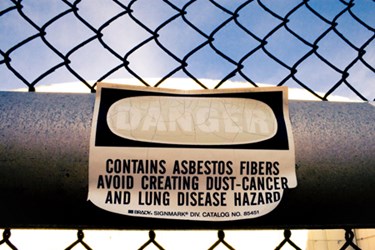
However it is extremely hazardous. Asbestos is the leading cause of work related deaths annually in the workplace as detailed by Asbestos.com. “91% The percentage of the approximately 255,000 global asbestos-related deaths that are attributed to work-related exposure.”
It was at the peak of its use in the 1900s, and according to again Asbestos.com, approximately 77 companies were recorded to have manufactured asbestos, with big names such as Ford Motor Company, General Electric and Motors, and Lincoln Electric.
Many companies knew the harmful effects of asbestos, but did not make efforts to publicize it to employees.
But, asbestos isn’t relegated to solely human constructs, as it is naturally occurring, and pops up heavily on the coastal states of the United States. But it does have pockets inland, a rather large area for it being the southern Nevada deserts.
Particularly to the south, southeast, and east of Las Vegas in Clark county to near Jean, Primm, Henderson, and Boulder City, and in Nye County, to the far west area. There it lingers in the dirt, and becomes airborne when stirred.
It wouldn’t be much of an issue, but areas like Jean-Primm dry lakebed, which has tested positive for asbestos, is a prime area for offroading and other recreational activities according to Las Vegas Territory. “Nearby, the Jean Dry Lake Bed offers miles of open desert perfect for OHV riding, drone footage, or catching a surreal desert sunset. Its cracked, cinematic landscape has been featured in films and music videos and remains one of the most photogenic spots in Southern Nevada.”
Granted, it’s not covering every inch of the ground, but it is still highly concentrated in the area and is seemingly not well publicized.
Though perhaps the best source on asbestos positive areas in Nevada, is the University of Las Vegas Nevada report, Naturally-Occuring Asbestos in Southern Nevada, by Brenda Buck, Rodney Metcalf, and Brett Mclaurin. In its 213 pages, is a motherload of information on the topic, containing various tables, photographs, and map data.
However, it should be remembered that the majority of work-related deaths, and by extent the majority of annual deaths, from asbestos exposure, are in the workplace. Going outside won’t be a death sentence. Furthermore, mesothelioma takes from 20-60 years before it takes effect as is.
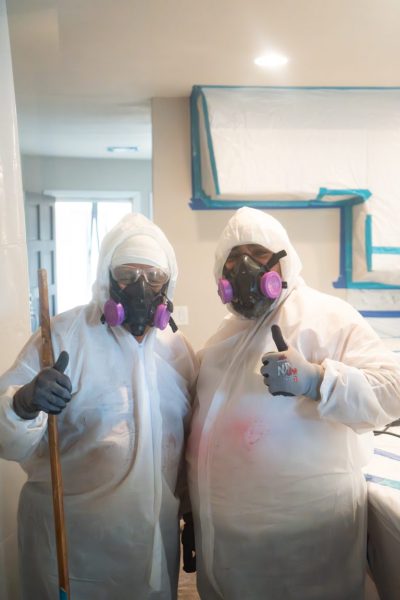
But in the event plans are made to go out in the desert, it would be wise to consult sources for asbestos in the area, and bring face protection such as a dust mask or a respirator. Perhaps something more covering apparel such as full body suits. Rather safe than sorry.