Gorillaz, as a band, is considered a modern revolutionary in the music scene. From songs like “Clint Eastwood,” which captivated millions during the early 2000s, to what is a contender for the best album of a decade, “Plastic Beach”, Gorillaz has cultivated an impressive tracklist and repertoire that leaves other artists envious. The band, created by Blur’s Damon Albarn and artist Jamie Hewlett, has earned a reputation for creating high-quality, experimental, genre-shaking tracks, and that reputation has been carried into a new year once again with their newest full-length album, “The Mountain,” which was released earlier this year on February 27, 2026. Following the band’s previous album, “Cracker Island,” which saw mid to decent feedback from critics, “The Mountain” has served as a breath of renewed triumph for both the band and its fans, proving that Albarn and Hewlett still have what it takes to produce meaningful, creative, genre-shattering art well over a decade after the release of their magnum opus.
Moving away from the neon, synth-heavy textures on “Cracker Island,” “The Mountain” finds its soul in a surprising, yet refreshing blend of organic Indian instrumentation and Gorillaz’s distinct electronic feel. The sonic landscape of the album encapsulates something much more coherent and full than its predecessor. The tonal palette feels more global at scale, seamlessly blending several styles once again to create something fresh; something Gorillaz is already known and loved for. This time around, however, there is a heavy presence of creative and cultural diversity, which serves to embolden the feel of freshness present in the tracks overall. Using a whopping total of six different languages (English, Hindi, Arabic, Spanish, Yoruba, and Russian) and featuring heavy use of Indian instruments such as the sitar and flute, the album delivers a very thoughtful and unique sound when mixed with upbeat synths. Influential features come to play as well when providing such a global feeling. Anoushka Shankar and Asha Bhosle contribute to the overall feel in tracks such as “The Plastic Guru” and “The Shadowy Light,” where Shankar plays the sitar and Bhosle provides masterful vocals and sings in Hindi. This sound shift hasn’t gone unnoticed by listeners. Local listener and Pahrump Valley High School student Joseph Ward noted, “I thought the album was very unique and creative, and what really influenced the cultivation of my opinion was that it was such a drastic shift in instrumental tone compared to the more conventional tone Gorillaz is known for. They did this by utilizing more Indian-based instruments like the sitar to evoke a similar, but enlightening emotion and tone.” In total, the album has been praised for its instrumentation and composition as another innovation from the band, and it serves not only to be a captivating centerpiece, but also a delightful move to keep the band fresh.
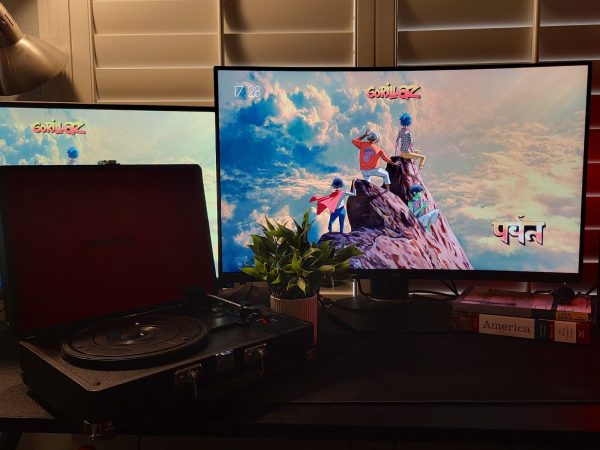
This enlightening tone mentioned by listeners is mirrored directly in the album’s visual identity. Jamie Hewlett, the artistic mastermind behind the band’s iconic look, has traded the gritty, CGI-heavy realism of past eras for a charming hand-drawn aesthetic reminiscent of 1960s animation. The move can also be interpreted as symbolic because, by using a style that feels so human, the band emphasized the themes of mortality and rebirth that define the album. Music videos and visualizers add to a very surreal, dreamy aesthetic, with peaks and clouds driving home baseline themes of supernatural or divine symbolism. The spiritual themes of “The Mountain” are grounded by sharp, contemporary social critiques, most notably in the track “The God of Lying.” The song serves as a mirror to modern apathy, opening with a barrage of introspective questions such as “Are you happy with your housing? Are you climbing up the walls? Are you deafened by the headlines, or does your head not hear at all? Are you pacified by passion?” These directly address a common problem with Gen Z experiencing an overwhelm of information and the passiveness that comes from it. Ward states, “Their apathy then makes them turn to vices, which is explored later in the song through lyrics like ‘I went to the liquor store, and they took all my money’ Overall, The God of Lying tries to make a call to action through their critique by talking about how bad modern society has become and that the viewer needs to better themselves.” Through all of this, Gorillaz successfully creates a call to action and advocates for people to stop obsessing over the depravity of the world and start climbing toward personal improvement.

While “Plastic Beach” famously explored the decay and pollution of our physical world through a landscape and setting of literal trash, “The Mountain” shifts its focus inward and trades environmental cynicism for a spiritual message of ascending toward healing. The heavy shift in perspective of the albums represents a fundamental shift in the band’s philosophy. “Plastic Beach” is seen as Gorillaz’s magnum opus by many fans; however, some may now argue that “The Mountain” provides something new and introspective in a way that the older project couldn’t. Many fans and critics noted a certain lack of cohesion with “Plastic Beach” and argued that many tracks were more of a setlist rather than a full, in-depth, narrative experience. There does seem to be merit in that assessment. It can be said that one of the most shocking developments, however, is not that “The Mountain” has successfully captured the brilliance and freshness of Gorillaz’s magnum opus, but that it is seen as being on par, if not better, than “Plastic Beach.” Metacritic scored “Plastic Beach” at a somewhat average 77/100, while “The Mountain” received an impressive 85/100. New Musical Express provided perhaps one of the most encapsulating and summarizing reviews, stating, “‘The Mountain’ is a full-bodied world-building affair; arguably their most rich and complete since “Plastic Beach.” However, not all listeners are convinced that “The Mountain” unseats its predecessor. Fellow student Joshua Flores, noting a specific perspective on the album’s spiritual themes, suggests that while the record is “tough competition” for “Plastic Beach,” it might lack the same call to action. “‘The Mountain’ reflects a post-religious view of the world with a yearning for happier days,” he observed, adding that while “Plastic Beach” inspired listeners to move beyond consumerism, “The Mountain” may simply “magnify the issue” of societal isolation. For listeners like Flores, the environmental grit of the 2010 masterpiece remains supreme, even if “The Mountain” “hardly falls short” from an artistic standpoint.
In many ways this new album is seen as a triumphant return to form for the band after a somewhat disappointing release. “The Mountain” proves that Gorillaz is far from a legacy act resting on its laurels. By blending a global sonic palette with a deeply human narrative of rebirth with sharp societal critiques sprinkled throughout, Albarn and Hewlette have managed to create something truly remarkable and decade-defining once again. As the band goes through a triumphant 2026, one thing is certain in that they are still finding new peaks to climb, and it would be a shame for you to pass on this pinnacle album.