One of humanity’s greatest forms of expression and recording is art, being a tool even used by the cavemen tens of thousands of years ago. Amongst the oldest of that group is sketching, which persists well into the modern day and is arguably the most common traditional art form. But how is it done?
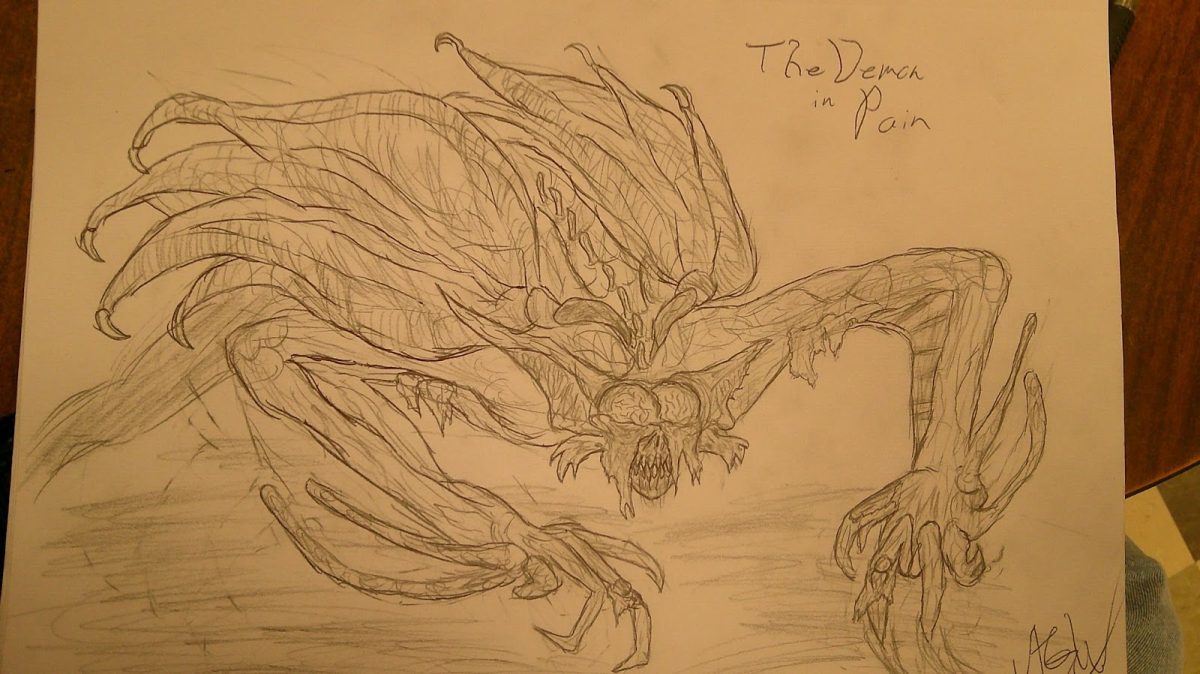
Sketching is a deeply complex art form despite its simple appearance. From landscapes, to abstract, to entities it makes for potentially infinite possibilities of what to create. Let the focus be on entities, a generalization for living beings. The most utensils needed are paper, a pencil, and (probably) an eraser.
Anything needs a first step, and it all starts with a base. The base will vary from artist to artist, as all operate in their own unique ways. But likely every process involves shapes. Think about seeing things in the clouds, applying something familiar from one’s own psyche, and plastering it onto the sky. The shape of the cloud vaguely lines up to something that strikes familiarity in someone, and wala! Art is the same way.
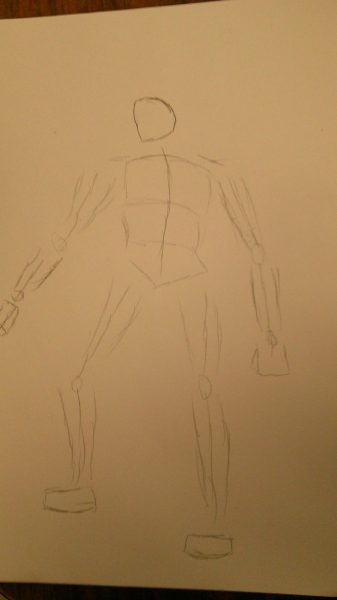
The first base is lines, assuming a vague position of the pose one is trying to create. Then comes applying shapes onto those lines. Rounded ones usually end up on the joints; for some a curved ‘t’ will be wrapped around it to help indicate the direction it’s moving in or facing.
Then, it moves on to larger shapes to fill out, in this case, the human form, not that all parts need a shape. The pelvis is more triangular, accounting for eventual fill in of the hips, the chest depends on the body shape. Arms and legs being long and cylindrical, and the head rounded.
Two of the more complex pieces are the hands and feet. Hands usually fall into misshapen squares to account for natural hand shape, but sometimes end up being three-dimensional off the bat to account for angle. The feet are similarly misshapen squares, but commonly are quite different. One leg might be straight, and face the point of perspective, whilst the other is angled out and pointed away.
The next big part is starting the details. Some artists will use or need a reference, whilst others won’t. Thanks to search engines like Google, most anything in the human compendium can be found in image form. In this case, armor. The apparel will be set onto the shapes, which act as one’s guidelines as to the size it needs to be to fit the person on the paper.
Often, the art will be messy, and be discouraging that it’s going to be bad. But perhaps the most important advice any artist can give, even if they sometimes forget it themselves, is to trust the process. Mistakes can be drawn over, erased, or even be reincorporated back into the final design.
Once the empty surface is applied, and it looks enough like the intended result, one can start to add the final details to everything small and precise, taking time to ensure it looks good and as intended. And perhaps just before that, would be a good time to erase the original base lines and shapes now that they are no longer needed.
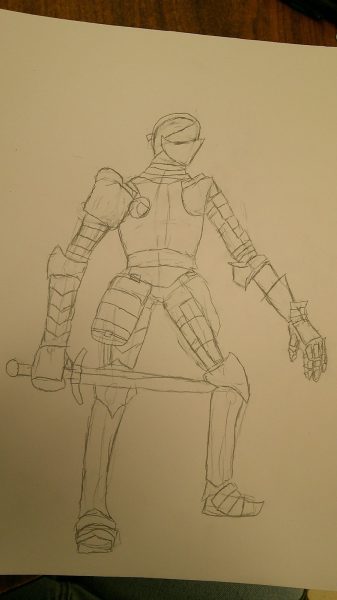
Once every detail is in, some may outline their work a little extra in pen to make sure nothing fades from the paper, especially in later steps that might blur the details, but it isn’t necessary.
Finally, but not always, comes shading. Not every artist shades, and not every artist knows how to, but it adds extra depth to the piece and further perspective into its reality.
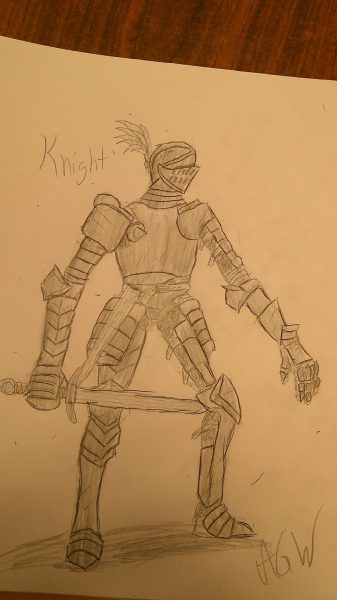
Before long, what existed in the brilliant mind of an artist has been translated to paper. The very final step, as any artist should do, is to add a signature.
Art isn’t for everyone. It is time consuming, messy, and often wearing to put oneself through the process to get a piece done, but it is almost always rewarding, if not for the artist, for others to gander at, admire, or interpret in their own ways. Art is the true gateway to endless creativity that any person should consider learning.